How to Choose the Best Emergency Dentist for Urgent Dental Needs
Dental emergencies have a way of stripping life down to one urgent question: who can help right now, and can you trust them to do it well? A chipped front tooth before a job interview is stressful. A swelling jaw at midnight is something else entirely. Pain changes judgment, and urgency often pushes people toward the first clinic that answers the phone. Sometimes that works out. Sometimes it leads to long waits, vague pricing, limited treatment, or a temporary patch that turns into a larger problem a week later.
Choosing the right Emergency Dentist is not only about speed. It is about speed paired with competence, access, clarity, and a practice that understands the difference between discomfort and a true emergency. People often assume every dental office can handle urgent care in the same way. In practice, that is rarely true. Some clinics reserve same-day slots and keep staff ready for trauma, extractions, severe infections, or broken restorations. Others can only offer a quick assessment and referral. Knowing how to tell the difference matters when minutes feel long and the stakes are high.
What actually counts as a dental emergency
Not every painful dental problem needs treatment within the hour, but many do need attention the same day. The difficulty is that pain does not always match the severity of the issue. A small crack can feel brutal if it exposes a nerve. A serious infection can begin with pressure and mild swelling, then escalate fast.
A true dental emergency usually involves uncontrolled bleeding, visible trauma, severe swelling, signs of infection, a knocked-out tooth, intense pain that prevents normal function, or a broken tooth that exposes the inner structure. Lost fillings, minor chips, or a dull toothache may be urgent without being emergent, but they still deserve prompt advice. A good Emergency Dentist helps sort that out over the phone instead of making you guess.
This is one of the first signs of a practice worth trusting. When a receptionist or triage coordinator asks smart questions, such as when the pain started, whether swelling is spreading, whether you have fever, whether a tooth was knocked out fully or partially, they are not being difficult. They are trying to direct care properly. That can save a tooth, prevent infection from worsening, and get you to a hospital if your symptoms point beyond routine dental treatment.
The first filter is availability, but not availability alone
People tend to focus on office hours first, and that makes sense. If you crack a molar on Saturday evening, a clinic that only books weekday cleanings is not your answer. Still, broad hours alone should not win your trust. Plenty of clinics advertise emergency care, but what they mean varies. Some mean same-day exams during regular business hours. Some mean after-hours phone advice but no in-person care until morning. Some truly maintain urgent treatment capability on evenings, weekends, and holidays.
When you call, listen for precision. Ask whether they can treat your specific issue today, not simply “see” you. There is a big difference between a brief exam and the ability to perform an extraction, re-cement a crown, drain an abscess, stabilize a fracture, or manage a knocked-out tooth properly. If the answer is vague, keep asking.
A reliable practice will usually tell you whether they can resolve the problem in one visit, offer temporary relief, or refer you to an oral surgeon or hospital. That honesty is a strength. In urgent care, clear limits are better than confident overpromising.
Signs that a clinic is prepared for real urgent care
Experience shows up in the details. Prepared emergency clinics tend to sound calm on the phone, move quickly without sounding chaotic, and explain immediate next steps in plain language. They often leave room in the schedule for same-day cases. They also know what information matters before you arrive.
Here are five useful questions to ask when you call:
- Can you treat this type of emergency today, or only assess it?
- What should I do before I arrive, especially if there is swelling, bleeding, or a knocked-out tooth?
- What is the expected fee range for the exam and likely treatment?
- Do you accept my insurance, and what payment options exist if treatment is extensive?
- If my case needs a specialist or hospital care, how do you handle referral and handoff?
These questions do more than gather facts. They reveal how the office thinks. A strong team answers directly, gives practical home instructions, and does not dodge the cost conversation. If they tell you to place a knocked-out tooth in milk, avoid scrubbing the root, come immediately, and bring any broken pieces, you are likely talking to people who handle these cases regularly.
Why clinical range matters more than marketing
Many urgent dental problems overlap. A broken tooth may need an X-ray, pain control, a temporary restoration, and possibly root canal treatment or extraction. Facial swelling can stem from periodontal infection, a deep cavity, or trauma. If a clinic handles only a narrow slice of emergency care, you may lose precious time bouncing between offices.
That does not mean the best Emergency Dentist must do everything under one roof. It means the dentist should have the training and judgment to diagnose accurately, stabilize the situation, and coordinate next steps without delay. In some communities, the most dependable emergency provider is a general dentist with broad experience and strong referral relationships. In others, it may be a larger group practice with in-house specialists and extended hours.
The key is fit. A teenager with a sports injury has different needs from an older adult with swelling around a failing bridge. A patient with severe dental anxiety may need sedation options. A person on blood thinners may need more careful planning before extraction. The best clinic for one emergency is not automatically the best for another.
Reputation is useful, but emergency-specific feedback is more useful
Online reviews can help, though they are imperfect. People often review routine cleanings more than urgent care, which means a five-star rating may tell you little about how a practice handles trauma or acute pain. Look beyond the overall score. Read for details that mention same-day appointments, after-hours help, infection treatment, front-desk responsiveness, pain management, or how the dentist explained options under pressure.
Patterns matter more than isolated praise or complaints. If several reviewers mention being seen quickly but feeling rushed, that is one kind of signal. If several mention thoughtful triage, transparent costs, and competent follow-up, that is another. Take reviews about “no pain at all” lightly, because pain perception varies. Pay more attention to whether patients felt informed, respected, and properly treated.
Word-of-mouth can be even stronger. A neighbor who needed a weekend extraction, a parent whose child fractured a tooth during a game, or a coworker who had an abscess drained can often tell you more in three minutes than thirty anonymous reviews.
Cost should be discussed early, not after treatment begins
Emergency care is stressful enough without financial surprises. One of the clearest markers of a well-run clinic is cost transparency. Exact totals may be impossible before an exam, especially if the dentist needs imaging to determine whether a tooth can be saved, but a responsible office can still give you a fee range for the urgent visit and explain how treatment estimates are handled.
That matters because emergency dentistry can branch quickly. A visit may start as an exam and X-ray, then move toward a filling, crown repair, root canal, extraction, incision and drainage, or medication management. Patients deserve to know what is likely, what is optional today, and what can wait.
If you do not have insurance, ask whether the office offers payment plans, third-party financing, or a staged approach that addresses immediate pain and infection first, then definitive treatment later. There is no shame in asking. Most experienced emergency teams know that urgent decisions are harder when money is tight, and the better offices discuss this plainly.
The human factor matters more than people admit
Technical skill is nonnegotiable, but communication can make or break an emergency visit. Pain narrows attention. Fear does the same. A dentist who explains what they see, what they recommend, and what you may feel during treatment lowers panic and improves consent. This is especially important for children, older adults, people with trauma histories, and anyone who already avoids dental care because of past bad experiences.
I have seen patients arrive convinced they needed a tooth removed, only to learn it could be stabilized and monitored. I have also seen the opposite, where a patient wanted a quick filling on a deeply infected tooth that needed far more than that. In both situations, trust depended less on charm than on a dentist’s ability to explain trade-offs without talking down to the patient.
A strong Emergency Dentist does not rush your questions just because the schedule is packed. They know that one clear minute of explanation can prevent confusion, noncompliance, and unnecessary return visits.
Equipment and logistics can change the outcome
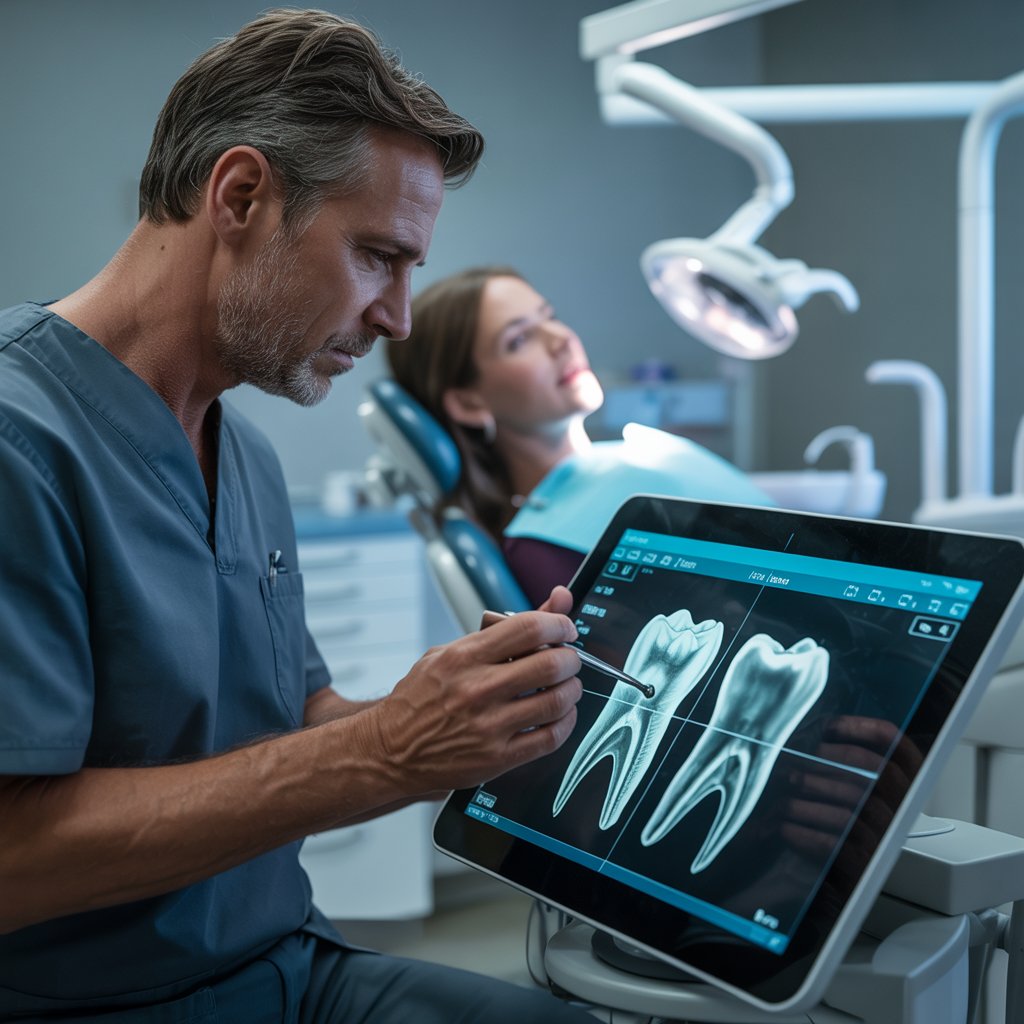
A clinic’s setup says a lot about what it can actually manage. Digital X-rays, for example, are standard in many offices and useful in emergencies because they speed diagnosis. Same-day imaging helps with fractures, abscesses, impacted teeth, and failed restorations. If the office offers cone beam imaging, that can be valuable in certain complex cases, though not every emergency requires it.
Sterilization protocols, on-site restorative materials, and staff familiarity with urgent procedures Vitality Dental Emergency Dentist matter too. So does scheduling flow. Some practices market emergency availability but stack urgent patients on top of a full day, which can mean long waits and shorter visits. Others intentionally hold blocks for same-day problems. You can sometimes hear the difference in how the office describes your timing. “We can squeeze you in” is not always a bad sign, but “we reserve emergency appointments daily” is often better.
Location matters as well. In ordinary healthcare, a short drive may be only a convenience. In a dental emergency, it can affect whether you go at all. A clinic forty-five minutes away may be less practical than one fifteen minutes away, especially if you are managing swelling, bleeding, or a child in pain. Accessibility, parking, elevator access, and weekend transportation all deserve consideration.
A good emergency visit includes a plan after the crisis
Urgent treatment often has two phases: immediate stabilization and definitive care. That distinction deserves attention. A temporary crown recement, smoothing a sharp fracture, prescribing antibiotics when indicated, or opening a tooth to relieve pressure may solve the immediate problem without finishing the entire case.
The best providers make this clear before you leave. They tell you what was done, what still needs to happen, what warning signs require a return call, and how soon follow-up should occur. If a clinic treats the pain but gives no coherent next step, that is a weak point. Dental emergencies have a way of recurring when temporary fixes are mistaken for final solutions.
A sound discharge conversation often includes guidance on eating, oral hygiene, swelling control, medication timing, and what degree of discomfort is normal. These practical details are not minor. They reduce complications and help patients avoid the common mistake of assuming silence means recovery is complete.
Special situations that call for extra scrutiny
Some patients should be especially selective when choosing an Emergency Dentist. Young children need a team comfortable with behavior management and age-specific trauma care. Pregnant patients need a dentist who can discuss what imaging and medications are appropriate during pregnancy. People with diabetes, immune suppression, recent joint replacement, or complex medical histories benefit from a provider who takes medical risk seriously instead of treating it as paperwork.
If sedation is likely to matter, ask directly what options are available. Some emergencies can be managed with local anesthetic alone, but not all patients tolerate that well. The office should explain whether they offer nitrous oxide, oral sedation, or only local anesthesia, and what that means for transport and consent.
Trauma cases deserve special mention. If a tooth has been knocked out, partially displaced, or broken near the gumline, speed and proper handling are critical. The right office will treat that urgency appropriately. If a clinic sounds casual about a knocked-out permanent tooth, that is a red flag.
Red flags worth noticing immediately
Most people do not need a perfect clinic. They need a competent, responsive one. Still, certain warning signs should push you elsewhere if you have a choice:
- The office cannot explain whether it can actually treat your emergency today.
- Staff minimize swelling, fever, or trauma without asking basic triage questions.
- Fees are withheld entirely until after you arrive, with no ranges or process explained.
- Reviews repeatedly mention poor follow-up after urgent treatment.
- The practice pressures you into major elective work during an emergency visit.
That last point is more common than it should be. Urgent care should focus first on the problem in front of you. There may be a time to discuss broader treatment needs, but a person in acute pain is not in the best position to weigh cosmetic upgrades or comprehensive plans. Ethical dentists know the difference.
How to prepare before you ever need one
The easiest time to choose an Emergency Dentist is before anything goes wrong. Most people do the opposite. They wait until a crown falls off during dinner or a wisdom tooth flares during a holiday trip, then start searching while stressed and half-distracted. A little preparation changes that.
Find out which local practices offer true urgent dental care, whether they accept your insurance, and whether they treat both adults and children if your household needs that. Save the number in your phone. If you have a regular dentist, ask how after-hours emergencies are handled. Some general practices provide excellent emergency access to existing patients even if their website does not emphasize it.
It also helps to know basic first-aid principles. A knocked-out permanent tooth should be handled by the crown, not the root. If dirty, it may be rinsed gently, not scrubbed. In many cases it should be stored in milk or saline and brought in immediately. Bleeding after trauma may respond to firm pressure with clean gauze. Swelling that affects breathing or swallowing is a medical emergency and may require hospital care rather than a dental office. These details matter when the clock is moving fast.
Making the call when time is short
When you are in pain, decision-making narrows. That is normal. The goal is not to become an expert in ten minutes. It is to identify a practice that combines responsiveness, capability, and honesty. If one office answers quickly, asks thoughtful questions, gives realistic options, and tells you exactly what to do next, that is often your best lead.
Trust the texture of the interaction. Competence in emergency care usually feels organized. Not cold, not slick, just organized. The staff knows what to ask. The dentist knows what they can do and what they cannot. Costs are discussed without drama. Follow-up is built into the plan. Those are the marks of a clinic designed for real urgent care, not just emergency branding.
The best Emergency Dentist for you may not be the cheapest, the closest, or the most heavily advertised. It is the one prepared to manage the actual problem you have, when you need help most, with enough skill and clarity to move you from crisis toward recovery. When a dental emergency hits, that difference is not subtle. It is the difference between being merely seen and being properly cared for.
Vitality Dental
1220 Coit Rd # 106, Plano, TX 75075, United States
+1 972-645-4100
FAQ About Emergency Dentist
What counts as a dental emergency?
A knocked-out tooth, significant mouth injury, severe tooth pain, or painful swelling warrants prompt evaluation. Call your dentist and describe your symptoms so the office can advise you on how urgently you need care.
What should I do if I knock out a permanent tooth?
Call a dentist immediately. Handle the tooth by the crown, avoid touching the root, and keep it moist. If you cannot put it back into the socket easily, transport it in milk or a tooth-preservation solution. Bring it with you to the appointment.
Should I go to the emergency room for a dental emergency?
Seek emergency medical care right away if you have trouble breathing or swallowing, uncontrolled bleeding, or a serious facial injury. For an isolated tooth injury or toothache without those symptoms, call a dentist promptly for guidance.